Search This Blog

Sunday, 11 September 2011

Jamaican Twist at Notting Hill Carnival

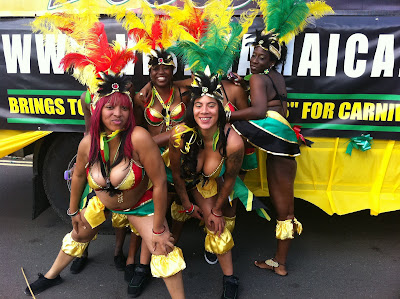
London’s Notting Hill Carnival has its roots firmly in the culture of the West Indian island of Trinidad, but since 2003, Jamaican Twist – the only Jamaican float to take part – has been an integral part, winning no less than six awards in the last three years.

There was some talk this year that the carnival would not go ahead in the light of the recent London riots. Boris Johnston said to cancel would have been to admit defeat, but the result would have been a lot worse than that. For many of the young, black and mixed race participants, it is a unique chance for them to express themselves and their culture.

Feisty, busty, tattooed Natalie (21 years) has been many times carnival queen for Jamaica Twist which she has been part of since she was just 13. I ask her if it just Jamaicans who can join the float. ‘Nah, nah, we are Brazilian, Jamaican, Scottish… we come from all over. And Jamaicans come from all over. It is like we say, ‘‘Out of many, one people’.

This is the fitting national motto and one taken up by the Jamaican Tourist Board, who sponsor the float each year. In true carnival spirit, Jamaican Twist collaborates with other musicians representing other islands and countries, including Trinidad and Tobago, Brazil and the South Pacific islands. Each year is a new theme representing a key part of Jamaican culture. This year it was it Bob Marley to mark the 30th anniversary of his death.

I couldn't imagine a better and stronger expression of community. And it is a particularly powerful statement when you remember that the first Notting Hill carnival was born out of a deeply racist and divided neighbourhood where signs saying: ‘No Blacks, No Irish, No dogs’ were commonplace.

Veronica, a charity worker, who volunteers with Jamaican Twist, explains that there are a lot of second and third generation Jamaicans who have never even been to Jamaica. The organisation, which also puts on events throughout the year, works very hard at engaging youngsters with a sense of pride of their community and of where they come from. ‘We have a very good Facebook page and we try to keep them interested in their culture, their music, dance and give them a bit of history. I do hope they dance decently today’, she says nervously.

They don’t. For a white middle class English girl like me, the grinding is shockingly sexual and I was surprised to see youngsters drinking brandy neat from the bottle at 11am. One young woman who had been to Jamaica on holiday skilfully grinded with the security guards, but at the same time three youths danced sweetly to a highly choreographed routine.

Carnival, despite what you might think, is not actually a spectator sport so I did my lame best to join in. Participants were not only of a mix of cultural heritage, but of all ages, backgrounds and dancing ability. We were issued with t-shirts (which most of the girls customised to make more revealing) and much needed ear plugs. The sounds from the three metre high walls of speakers that lined the Jamaican Twist truck were deafening. A tiny space in the middle was given over to a fridge, microwave and DJ. After a truly Jamaican start, we set off two and a half hours late, fortified with the best jerk chicken with rice and peas I have ever tasted and the strongest rum and coke.

Notting Hill may now be one of London’s most desirable areas, but as recently as the 1970s it was described as ‘a massive slum, full of multi-occupied houses, crawling with rats and rubbish’. Home to large communities of Afro-Caribbean immigrants, and racial tension inevitably reared its head. It was in this part of West London that the first race riots occurred in 1958. The Carnival was the joyous and peaceful response, which first took place indoors, but by 1965 had taken to the streets. The multi cultural celebration has grown each year and now sees around two million visitors over the two-day event.
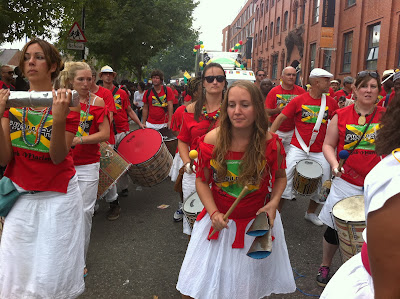
Alexander D Great, the UK Calypso Monarch explained: ‘That procession declared to the British public how Caribbeans celebrated - with joy and with laughter and with jumping and dancing - an event like this, and the carnival is also representative of the same thing. And maybe this was the first time that the British public saw the Caribbean spirit in Britain in the open air.’
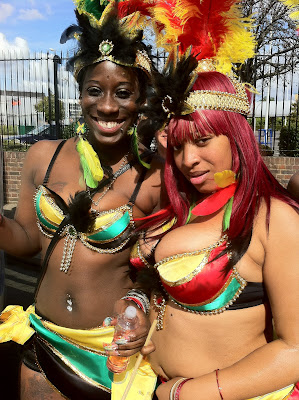
For just |15 pounds (for a t-shirt and to follow the float) anyone can join the carnival. If you want to wear a costume, it is 85 pounds, which also includes a meal, drinks and patties.

www.jamaicantwist.com/membership.

Notting Hill Carnival in London is second only to Rio’s in Brazil. And my advice to enjoy both is the same: join in.

Thursday, 25 August 2011

California's Road Less Travelled


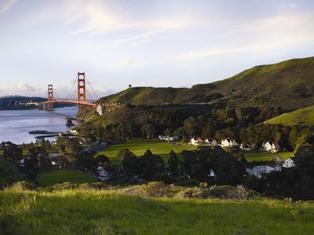
When I said I was going to San Francisco, many friends queued to tell me it was their favourite city in the world. I too am a big fan of San Fran’s laid back charms – but beyond the Golden Gate Bridge are less peopled parts of Southern California, with a bounty of natural treasure that many visitors miss completely.

Of course, nearby Yosemite, Sequoia and Kings Canyon are California’s big three when it comes to national parks. Popular fly-drive breaks see a healthy flood of international tourists land at San Fran, stay for a few days to sample city life and then head out to one or more of these natural wonders. But I sought the road less travelled.

I decided to venture across the Golden Gate Bridge to visit charming Sausalito, traditional seaside Santa Cruz, awash with nostalgia, and some of southern California that many visitors miss. An unforgettable hike in the little known but spectacular Pinnacles National Monument, ocean kayaking in sleepy Monterey Bay and a visit to the largest marine sanctuary in the US left me with some real gilt-edged memories of the Golden State of California.

I began my trip, and thoroughly recommend, staying at Cavallo Point, a luxury lodge with extraordinary bay views, and rooms that start at a good-value $280. It began life as Fort Baker in 1905, but has been lovingly converted into an eco resort over the last ten years. The Point is in the pretty waterfront community of Sausalito, within the Golden Gate National Park and standing practically at the foot of the famous bridge. It’s just a 30-minute taxi ride to the heart of San Francisco, but who needs a cab to some fancy downtown eatery when the Point has Murray Circle – its own Michelin-starred restaurant. You can reach the city by ferry too, but I chose a breathtaking 90-minute pedal-powered ride over the bridge, one of the highlights of my trip.

From Sausalito, I headed 75 miles south through the state. The thrills of Santa Cruz Beach Boardwalk with its classic Americana and obligatory Big Dipper passed me by. But for those who love all the fun of the fair, an all-day wristband is a steal at less than US$30.

My next stop was Monterey Bay, around 120 miles south of San Fran. The bay is just the beginning of a ruggedly scenic coastline that zigzags for 300 miles as far down as Ventura. You may not have heard of the laid back coastal town of Monterey Bay, but Steinbeck immortalised the area’s long-gone sardine fisheries in Cannery Row, and the town’s non‑profit aquarium is widely agreed to be one of the best in the world. The undeniably impressive Open Sea gallery – a million-gallon exhibit populated with sea turtles, sharks and puffins – opened in July 2011 to much acclaim.

Friday, 5 August 2011

New breed of Bangkok Hotel


The Bangkok Loft Inn is an exciting addition to the traditional Bangkok accommodation scene. This ‘inn’ is an example of a new breed of modern, simple boutique hotels that are springing up not just in Thailand, but in big cities worldwide. Although not in the heart of the traditional tourist area, this excellent value option is conveniently close to the futuristic Skytrain station that can whisk you around town. Expect real wood floors, sleek modern furnishings, free Wi Fi, spotless rooms and a welcome free pick up from the airport (you may have to wait though).


Wednesday, 29 June 2011

Sailing on America's Cup Yacht, San Francisco Bay

I got a sneak preview of the 34th America's Cup which is taking place in San Francisco in 2013, a 90-day event that will see around 40 of the fastest sail boats in the world compete. On a glorious, if windswept, day we set sail on America in San Francisco Bay, a local journalist telling me: ‘They say if you can sail in San Francisco you can sail anywhere in the world.'
This beauty is the $6 million replica of the schooner after which the race is named, although I had always assumed that it took its name from the country. The original yacht won Queen Victoria's 100 Guinea Cup in England way back in 1851 and finally 'perished' in 1945 – well, it was actually left to rot.
‘We have a head on board’ the captain and co-owner announces. My husband translates, whispering that a head is a toilet. It is probably the only bit of the yacht's equipment that I really need to know about. Some of the passengers have eagerly offered their services as deck hands, but I am here to admire the view as we sail under the Golden Gate Bridge.
This is a racing craft, after all, not a pleasure cruiser, although the owner tells me he and family often have Thanksgiving dinner round the table on deck. He goes on to say: ‘I love to sail. I just came back from a trip where I saw 40 humpback whales playing with me in the bay. If people could see what I saw, they would all want to sail.’
Weekly sailings on the America take place throughout July from Golden Gate Yacht Club. The USA 76 is permanently available on the bay for sailings. I am told it is 'the most modern America’s Cup yacht available anywhere in the world for public sailing experiences.' Reservations www.acsailingsf.com

Wednesday, 22 June 2011

Lifesaver near London

Stressed out Londoners can jump on a train at Liverpool Street and be in Lifehouse in just over an hour. Who needs glamorous overseas villa holidays when we have this on our doorstep? In Thorpe-le-Soken, Essex, a ten-minute drive from the pretty beach town of Frinton-on-sea, the Lifehouse opened in December 2010 to the tune of £30 million. The modern, simple buildings and 130 acres of grounds, including 12 acres of magnificent listed gardens, form an extensive holistic retreat.

I was greeted by an effervescent young trainer, Shelley who enthusiastically reeled off a list of activities from acupuncture and boot camp to Zumba. I did a very enjoyable Vinyasa session in the dedicated yoga and pilates room, with the radiant Jocelyn, who also advises guests about raw foods.

Lifehouse’s signature treatment, the Oriental Bathing Experience, is inspired by traditional bathhouses in the east. During a sensory two-hour session I was taken on a journey through Asian cultures. My therapist began by gently pouring milk bath laced with ginseng, green tea and gingko from a ladle made with coconut over my feet, explaining that this is both grounding and a sign of respect. After tapping my feet with a wooden stick as part of a traditional Thai ritual, she swaddled them in white nappy-like towels.

I walked on a stone circle breathing in Moroccan rose oil, which was wonderfully meditative, and was scrubbed down in a Japanese bathhouse. The experience ended with a Japanese tea ceremony and a blissful hot stone massage. After just two days I tripped back to Liverpool Street Station feeling as if I had been away for a week.

The full article appears in Yoga Magazine in July.


Tuesday, 7 June 2011

Travel Diaries

Holly Jones is an enthusiastic would-be travel writer who writes a travel blog (http://hjtraveldiaries.blogspot.com). Holly is about to travel the world on her gap year and got in touch with me to ask my advice about Thailand. My AA Spiral guide to Thailand is available on Amazon.


Travel writing as a career would be a dream for me. Getting to travel, write about about the travels and then paid for it - yes please! Although I'm sure there's a tad more hard work involved! Jane Egginton has had 20 years worth of experience writing and editing in the travelling field. Some of the travel guides she has edited and written in include Dorling Kindersley, Thomas Cook and Michelin. She also spent four years in house at Readers Digest. Suffice to say she has had a lot of travelling experience and knows her stuff! I was lucky enough to get an opportunity to ask her some questions, so here they are. Also check out her travel blog here (I love it!) - http://www.travelwriteruk.blogspot.com/ and follow her on twitter here - http://twitter.com/#!/janeegginton. Thank you Jane!

Holly - I've just arrived in Thailand what's the first thing I should do?

Jane Egginton - I would jump in a tuk tuk, whizzing round the traffic clogged streets, this always gives me a real buzz. Then, pull up at a street stall and tuck into some freshly cooked, delicious local food.

H - Thailand is known for it's food, what's good to eat there and any favourite meal you've had there?

JE - I love it all. The fresh fish, cooked in delicate spices, the chilli infused noodle soups, crunchy pad thai...

H - For you does Thailand mean party party or rest and relaxation (or both?!)?

JE - I was never one for those full moon parties, but I love to languish on the white sand beaches and usually find myself having a massage every night - they are a steal and some of the best in the world

H - How would you sum up Thailand in three words?

JE - Smiling, spicy, beautiful

H - What attracted you to South America?

JE - The language (I wanted to improve my Spanish, but couldn't communicate in Spain - Latin Americans are so much more patient), the landscapes - the variety - from beaches and desert to rainforest and mountains is astounding.

H - What are some of your favourite places, things to do or experiences in South America?

JE - I love the desert in Bolivia, which also has a fascinating indigenous population. Colombia is extraordinary and I got married on the beach on its Caribbean coast. My favourite is Brazil. The people are so open (they call us 'fechado' - closed).

H - What's unique about Brazil?

JE - Well, they speak Portuguese, unlike the rest of South America, but what really hits you is the personality of its population. Just go - you will understand what I mean.

H - What are your essentials when setting out on a new trip?

JE - I am not a great planner, but I always carry my iphone with me to be connected to the world.

H - Finally for you, what's the best thing about travelling?

JE - Meeting other people and learning about the world.

Friday, 3 June 2011

A Taste of Spain


As the Taste of Spain (www.atasteofspain.co.uk) kicks off in London on Sunday, consider the little island of Lanzarote, one of the smallest of the Canary Islands, which has a reputation of being brash and, well, not very nice. Monty Python man Michael Palin with his ‘Lanzagrotty’ tag is to blame, but many locals are actually grateful that his description has kept so many potential holidaymakers away, claiming it has helped to preserve the local traditions.

There is an authenticity about life in Lanzarote, more than in many places in Spain. Although undeniably popular as a tourist destination, the island remains essentially rural and was declared a biosphere reserve by UNESCO in 1993. With less rainfall than the scorching Sahara desert and year-round sun, the lovely island of Lanzarote is often mistaken for a barren landscape sprouting nothing but volcanoes. Yet, a huge variety of food is grown here, in the same way as it has been for hundreds of years, using simple and largely organic farming methods. Vines for the surprisingly good Malvasia wine, corn and sweet potatoes are amongst the bumper crops.

Read the full article at http://www.cd-traveller.com/2011/06/03/a-taste-of-lanzarote/